Skip to content
Foto Ratio Arkitekter ratio+alt_livsvitenskapsbygget_eventryliglandskap_copyrights_www.mir.no_final5-(2)

Reliable emergency power for critical environments

A DRUPS-based solution for the Life Science Building in Oslo.
Last updated: 21.08.2026

Project summary

The Life Science Building in Oslo requires reliable power for research, education, and healthcare environments where even short interruptions can have serious consequences.

BOS Power delivered an integrated DRUPS-based emergency power solution designed to provide uninterrupted power, fast response to disturbances, and long-term operational reliability. The solution combines kinetic energy storage, diesel generators, and advanced control systems in one integrated setup.

  • Project: Life Science Building, Oslo
  • Application: Research, education and healthcare
  • Solution: DRUPS emergency power system
  • Key requirements: Uninterrupted power, rapid response, stable power quality and long-term serviceability
  • BOS Power role: System integration and emergency power delivery

Introduction

A national landmark with demanding requirements for power reliability

Scheduled for completion in 2026, the Life Science Building in Oslo will be Norway’s largest and most advanced hub for research and innovation across chemistry, pharmacy, biosciences, and medicine.

Bringing together expertise from the University of Oslo and Oslo University Hospital, the facility is designed to strengthen collaboration between research, education, and clinical practice.

At the same time, the scale and complexity of the facility place exceptional demands on infrastructure, particularly when it comes to ensuring stable and reliable power.

Continuous operation is critical in environments where even brief disruptions can compromise sensitive experiments or vital healthcare services.


This case outlines how BOS Power, in collaboration with key stakeholders, delivered a DRUPS-based emergency power solution to ensure stable and reliable operations for a complex healthcare and research facility.

As a result, the project sets stringent requirements for uninterrupted power supply, consistent power quality, rapid response to grid disturbances, and long-term operational reliability. Meeting these demands has required both advanced technical solutions and a new approach to coordination and execution

Foto Universitetet i Oslo (UiO) – Livsvitenskaplvb_925x562
Illustration of one of the new laboratories in the Life Sciences Building. Photo: Statsbygg / Ratio Arkitekter and KVANT 1
The challenge

High demands for reliability and precision

The Life Science Building (Livsvitenskapsbygget) in Oslo is one of Norway’s most ambitious and strategically important construction projects.
 
Designed as a shared facility for leading university and hospital environments within life sciences, the building will host the University of Oslo (UiO) and the Clinic for Laboratory Medicine (KLM) at Oslo University Hospital (OUS) under one roof.

With close to 100,000 m² dedicated to research, education, and innovation, the building will accommodate approximately 1,000 UiO employees, 1,500 students, and 650 hospital staff. Large parts of the facility consist of advanced laboratories and highly specialized technical environments where power stability is critical.

The scale and complexity of the project also required close coordination across multiple stakeholders.

Key requirements for the project:
  • Uninterrupted power supply
  • Stable and clean power quality
  • Fast and seamless response to disturbances
  • Long-term operational reliability 

In addition, the project represents a new collaborative model for large public construction in Norway, challenging traditional rigid delivery methods and placing strong emphasis on coordination, flexibility, and technical precision. 

Ensuring reliable emergency power in such a complex environment was therefore both a technical and organizational challenge.

Foto Ratio Arkitekter ratio+alt_livsvitenskapsbygget_eventryliglandskap_copyrights_www.mir.no_final5-(2)
Photo: Ratio Arkitekter
Solution

An integrated DRUPS-based power solution

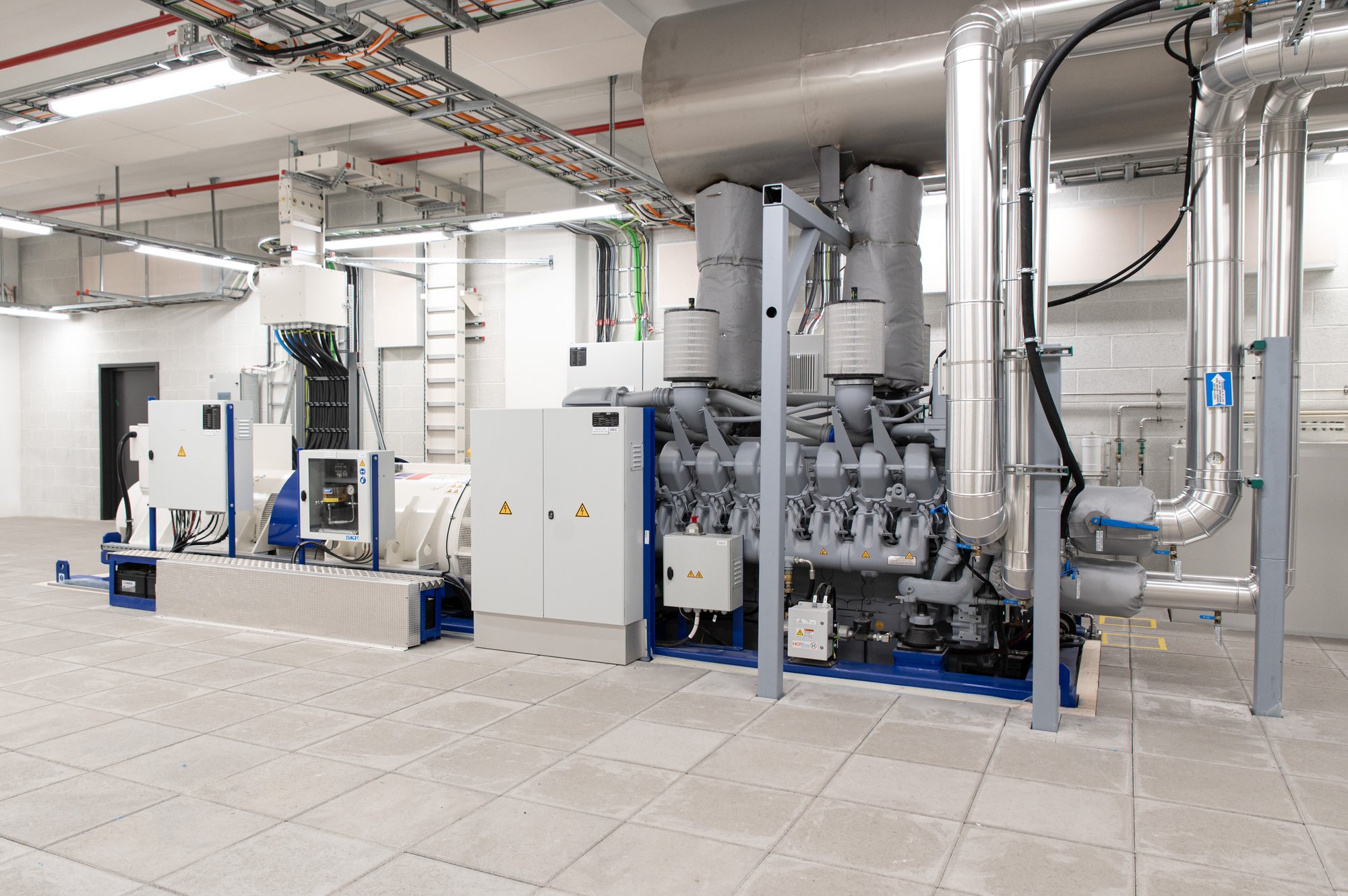
To meet these requirements, BOS Power delivered a DRUPS (Diesel Rotary Uninterruptible Power Supply) solution designed to ensure uninterrupted operations in this advanced research facility.

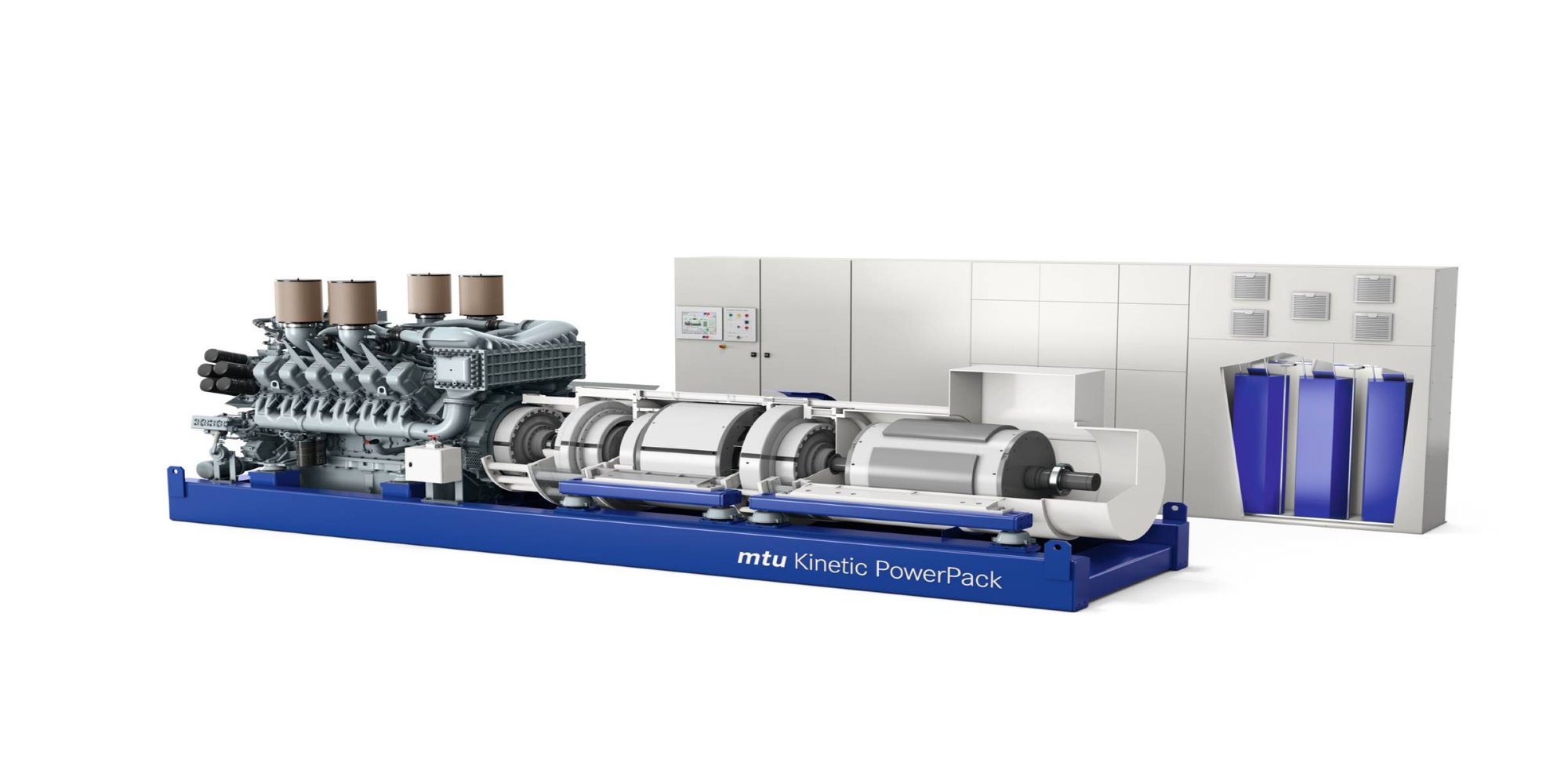
As part of the electrical scope led by OneCo, BOS Power supplied a system based on three mtu Kinetic PowerPack DRUPS units.
 

Key components:
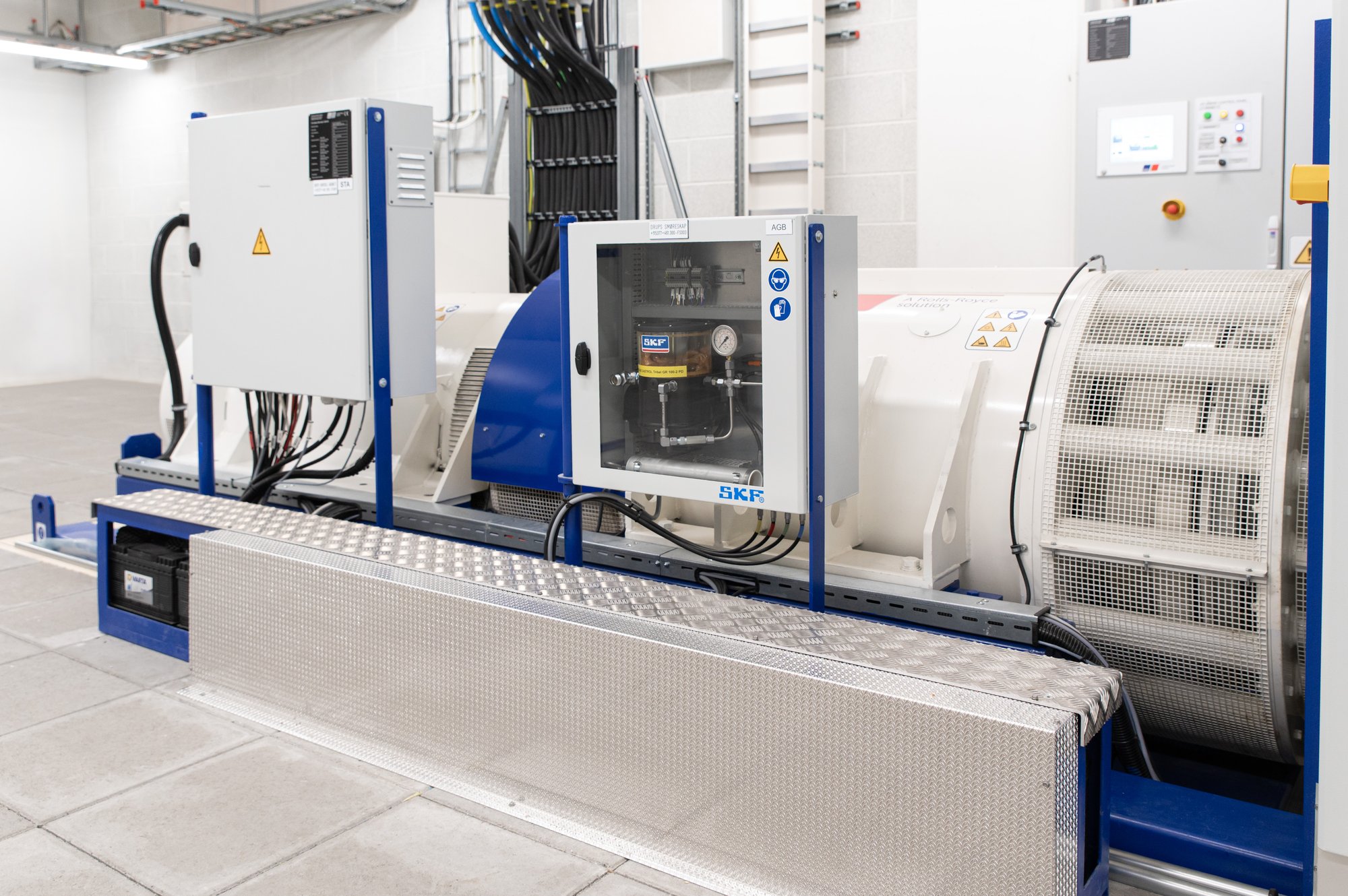
  • Flywheel-based kinetic energy storage
  • Diesel generators
  • Advanced control systems


This battery-free configuration reduces risk and supports reliable performance in critical applications.

Developed in close collaboration with partners and stakeholders, the solution was engineered to integrate seamlessly into the building’s infrastructure, supporting both current needs and future scalability.

FFG_3004
Secure operations 24/7 with DRUPS solution

DRUPS Systems (Diesel Rotary UPS)

Learn more about our emergency power solutions for critical infrastructure.

Best suited for:

  • High-availability data centers
  • Mission-critical infrastructure
  • Facilities requiring seamless transition without battery dependency

Designed for high reliability, reduced complexity, and long-term operational resilience.

Key Benefits

The emergency power solution delivered to the Life Science Building provides a robust foundation for uninterrupted research, education, and healthcare operations in one of Norway’s most advanced research and healthcare facilities.

Together, these benefits form a solid foundation for one of Norway’s most important hubs for health, research, and innovation.

FFG_3057

Key benefits include:


Stable power under all conditions
  • Delivers consistent, high-quality power, even during sudden load changes, ensuring reliable performance for sensitive equipment.

Seamless transition during outages
  • Ensures smooth transitions during grid instability or outages, with no disruption or data loss.

Battery-free reliability
  • Eliminates battery-related risks while reducing maintenance requirements.

Future-ready infrastructure
  • Designed for scalability and long-term operation, supporting evolving needs over time.

Close collaboration from design to delivery

The Life Science Building is a national investment in knowledge, health, and future competitiveness. It involves multiple stakeholders across public institutions and industry, requiring close coordination throughout the project.

Behind the advanced architecture and cutting-edge laboratories lies a highly coordinated effort between public institutions, contractors, and technology partners.

BOS Power’s contribution to the emergency power infrastructure highlights the importance of early involvement, technical expertise, and close collaboration in complex, mission-critical projects. Working alongside OneCo and other key stakeholders, BOS Power helped ensure that power reliability is fully integrated into the building’s core infrastructure.

As the building moves toward completion, the solution is designed to support research, education, and critical healthcare operations — securely, reliably, and without compromise.

Scope of supply

The delivered solution includes all core components required for a fully integrated and reliable emergency power system, designed to meet the facility’s demands for performance, safety, and long-term operation.

The system includes three mtu 2000 kVA DRUPS units, complete with:

  • IPS control system
  • Cooling system with free-standing radiators
  • Ventilation system with acoustic louvers, dampers, and intake fan
  • Exhaust silencer and piping with insulated steel support structure
  • Double-walled day tank (1,000 litres)
  • Two fuel storage tanks
Foto Ratio Arkitekter ratio+alt_livsvitenskapsbygget_eventryliglandskap_copyrights_www.mir.no_final5-(2)

“For Statsbygg, this delivery represents a cornerstone in securing a safe and reliable power supply 
for the Life Science Building. The system is both extensive and technically advanced, designed 
to meet the facility’s substantial backup power requirements.

The project has high expectations for precision, quality, and cost predictability, and BOS Power 
has demonstrated strong commitment throughout. Equally important, we have shared a clear and 
consistent focus on safety, health, and the working environment - an essential foundation 
for delivering the project responsibly and with confidence.”

Sven WertebachProject Director, Statsbygg

“We delivered three mtu kinetic PowerPacks - each rated at 2000 kVA (400 V, 50 Hz). They are 
designed to ensure a reliable power supply at the new building. The mtu Kinetic PowerPacks 
combine flywheel energy storage with diesel generator backup, delivering seamless, battery-free 
power protection ideal for sensitive lab and research environments. They can do more than just 
provide emergency power in the event of a power outage. They also continuously regulate power 
quality by compensating for fluctuations, ensuring a stable and reliable power supply. The project 
was successfully implemented with our valued partners BOS Power and Akselsen Engineering AS, 
marking a major milestone in bringing resilient, zero-break power infrastructure to one of Norway’s 
most advanced scientific facilities.”

Serge BodarweSales Manager mtu Kinetic PowerPacks, Rolls-Royce Power Systems

"The Life Science Building represents a new generation of critical infrastructure where research, 
healthcare, and advanced technology are closely integrated. In environments like this, energy 
resilience is not just a technical requirement, but a foundation for safe and continuous operations.
By delivering a DRUPS-based emergency power solution tailored to the project’s requirements, 
we have helped establish a robust and future-ready power infrastructure for highly sensitive 
laboratories and critical medical functions.

Projects like this also highlight the growing importance of protecting society’s critical functions, 
where reliable power solutions play a key role in safeguarding essential services.
We are proud to contribute to a landmark facility that will support research, education, and 
healthcare in Norway for decades to come.”

Carsten HøjerupDirector PowerGen, BOS Power

Frequently asked questions

What is the Life Science Building emergency power project?

The Life Science Building in Oslo is a large research, education and healthcare facility with demanding requirements for reliable and uninterrupted power.

Why was DRUPS selected for the Life Science Building? A DRUPS system combines immediate stored energy with generator backup, making it suitable for applications where critical operations cannot tolerate interruptions during power disturbances.
What did BOS Power deliver? BOS Power delivered an integrated DRUPS-based emergency power solution including kinetic energy storage, diesel generators, control systems and associated system integration.
What was BOS Power's role in the project? BOS Power contributed emergency power and system integration expertise and worked with project partners and stakeholders to integrate the solution into the building's technical infrastructure.
Why is reliable emergency power important in laboratories and research facilities? Research facilities can contain sensitive equipment, ongoing experiments and critical systems that may be affected by even short power interruptions. Reliable emergency power helps maintain stable operation when the grid supply is disturbed.

Talk to an emergency power expert

Planning emergency power for a facility where downtime is not an option?

Our specialists can help you evaluate system requirements, redundancy, integration, serviceability and the right emergency power architecture for your operation.

TOUCH
Arild Jensen General Manager

Sales | Power Generation

t. +47 916 65 281

Arild Jensen General Manager
Download

Want to save the case study or share it with a colleague?

Download a PDF version – perfect for reading later or forwarding to your team.

Not sure what type of power solution you need?

Talk to BOS Power about your requirements and we will help you find the right expertise.