Skip to content
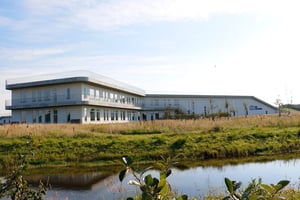
Exterior of Din Forsyning utility building with blue sky.

Reliable energy supply during the transition away from coal

Combining mtu Emergency Power and mtu Energy Storage.

How BOS Power helped DIN Forsyning strengthen supply reliability by combining mtu Energy Storage and Emergency Power as part of its transition towards a greener energy system.

Last updated: 21.08.2026

Supporting the transition from coal to more flexible energy supply

DIN Forsyning needed to maintain a reliable heat supply while reducing its dependence on coal and increasing the use of renewable energy.

BOS Power delivered a solution combining mtu Energy Storage and Emergency Power to provide additional capacity and flexibility when renewable energy or normal production cannot fully meet demand.
  • Customer: DIN Forsyning
  • Application: District heating/energy supply
  • Challenge: Maintaining reliable heat supply while phasing out coal
  • Solution: mtu Energy Storage combined with mtu Emergency Power
  • Primary value: Flexible capacity, supply security, and support for the green transition
  • BOS Power role: Project management, installation and commissioning

DIN Forsyning's transition to a more flexible energy supply

BOS Power secures operations for DIN Forsyning with mtu Emergency Power and mtu Energy Storage.

DIN Forsyning was established in 2015 through the merger of utility services from Esbjerg and Varde municipalities in Denmark.

The company provides essential services, including water supply, wastewater management, district heating, and waste collection, serving approximately 185,000 residents.

In 2018, they began transitioning towards more sustainable operations when Ørsted announced the closure of the Esbjergværket, their last coal-fired power plant, which had supplied district heating. The plant officially shut down in August 2024, leaving DIN Forsyning with no choice but to find alternative heating solutions to maintain a stable district heating supply. This necessity became the catalyst for their transition to greener energy sources.

DIN Forsyning is dedicated to sustainability and innovation, ensuring efficient and environmentally friendly utility solutions.

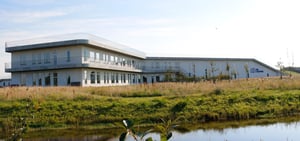
Modern Din Forsyning facility with glass facade and grass in foreground.
The challenge

Replacing Coal-based Heat Production

DIN Forsynings primary challenge was to eliminate coal as an energy source, which previously accounted for 50 % of their supply. Since they needed to establish a new system, they aimed to make it as green as possible.

One of DIN Forsynings main strategies was to diversify energy sources, allowing them to select the most cost-effective option at any given time.

From the beginning, their plan was to comply with district heating regulations, which mandate a maximum of four hours of downtime per year. This meant they had minimal margin for error and needed a system capable of maintaining heat supply even during power outages.

Initially, they considered a diesel-powered backup system for power outages, but they pivoted towards a greener solution using natural gas, which is more sustainable than diesel. Their goal was to integrate biogas into their energy supply chain.

Key requirements for the project

  • Reliable heat supply
    DIN Forsyning needed to maintain sufficient heat capacity even as coal was phased out.
  • Flexibility during peak demand
    The energy system needed additional capacity during periods of high heating demand.
  • Support for renewable energy
    The solution had to complement an energy mix increasingly based on renewable sources.
  • Reduced dependence on fossil fuels
    New capacity had to support DIN Forsyning's transition towards a greener energy system.
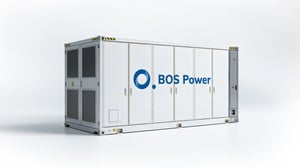
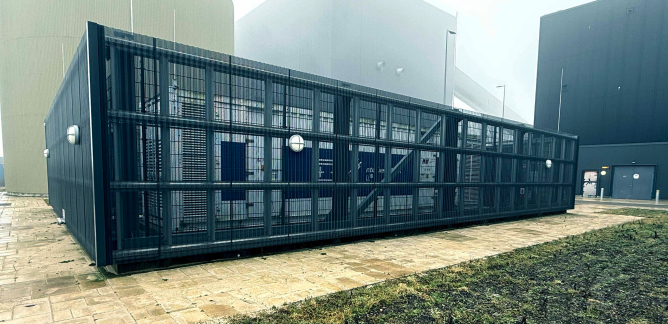
Containerized power units with ventilation systems outdoors.
Solution

An integrated energy storage and emergency power solution

To meet these requirements, BOS Power worked with DIN Forsyning and project partners to develop a solution combining energy storage with dispatchable emergency power capacity.

DIN Forsyning worked closely with BOS Power, Rolls-Royce Power Systems and other project partners to develop an integrated solution for its specific operational requirements.

MBOS Power and Rolls-Royce Power Systems supported the project through system design, technical consultancy, order fulfilment and coordination during delivery.

While the individual technologies were well established, integrating them into one energy system required close coordination between the manufacturer, system integrator and customer. The interfaces, operating principles and system requirements had to be aligned, defined and tested as part of the project.

The project followed a conventional tender, offering and negotiation process. During the contract phase, the parties held dedicated meetings to align on the technical content, scope of supply, responsibilities and overall project execution.

This process established a shared understanding of the scope and deliverables and helped reduce deviations during project execution.

Any deviations or changes identified during execution and delivery were discussed between the parties. Approved changes were handled as variation orders and incorporated into the project scope.

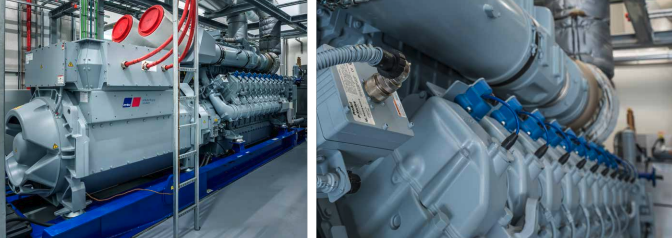
Industrial mtu gas engine inside facility and close-up of mtu engine components.
High efficiency cycle

Energy Storage

Battery storage provides flexible capacity that can respond quickly to changing operating conditions and support more efficient use of available energy.

Reliability

Emergency Power

The emergency power system provides additional controllable capacity when required, helping maintain supply security during periods when other energy sources cannot meet demand.

maximum-uptime_icon

System integration

BOS Power contributed project management, installation and commissioning to ensure that the technologies operate as an integrated part of DIN Forsyning's energy infrastructure.

Operational benefits of the integrated energy solution

The integrated solution provides DIN Forsyning with greater energy flexibility while supporting reliable heat supply and more efficient use of available energy sources.

One of the most important advantages of the solution is that it will fulfill various functions: backup power, heat and grid services.

DIN Forsyning's primary challenge was to eliminate coal and transition towards a more flexible energy mix. The system combines heat and power production and can achieve a Combined Heat and Power (CHP) efficiency of up to 99.9%. It simultaneously generates electricity and heat, enhancing both efficiency and sustainability

Additionally, the mtu gas generators are H2-ready, and DIN Forsyning can operate their system in a CO2-neutral way with green hydrogen in the future. An innovative feature of the system is the efficient reuse of heat. Designed to maximize fuel usage, the system captures excess heat from two primary sources: the engine cooling and exhaust systems. This high-volume hot exhaust gas and other heat are funneled through a heat exchanger, transferring the captured energy into hot water. This hot water is then circulated through the heat exchanger, providing effective cooling for both the engine and the exhaust, thereby enhancing the overall efficiency and sustainability of the operation.

Another key achievement is compliance with strict district heating regulations, which stipulate a maximum of four hours of downtime per year. This reliability, combined with the generation of additional financial returns through Frequency Containment Reserve (FCR) revenues, is achieved without incurring substantial operational costs.

The hybrid energy setup enables DIN Forsyning to monitor market prices and ensure cost-efficient heat production for consumers. One goal was to transition from coal to a flexible energy mix, optimizing heating costs across seasons through real-time monitoring and automated quarterly adjustments.

Key benefits

  • Greater energy flexibility
    Energy storage provides fast-response capacity that can help balance production and demand.
  • Reliable heat supply
    The combined solution provides additional capacity when normal production is insufficient.
  • Better integration of renewable energy
    Flexible storage and controllable backup capacity support an energy system with a growing share of renewable sources.
  • Reduced reliance on coal
    The solution forms part of DIN Forsyning's wider transition away from coal-based heat production.
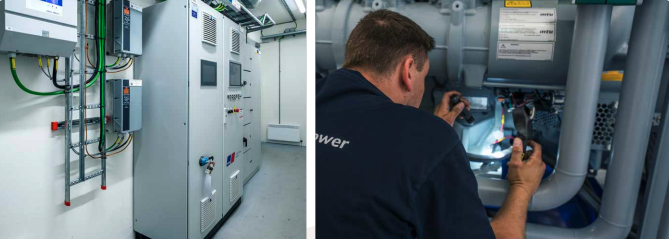
Technician inspecting control panels inside facility.

Project collaboration and system integration

Projects that combine new energy technologies with existing infrastructure require close cooperation between customer, suppliers and technical specialists.

BOS Power, Rolls-Royce Power Systems and DIN Forsyning worked closely throughout the project to align technical requirements, responsibilities and project execution..

Continuous dialogue and transparency were important throughout execution and delivery. This gave the parties a shared understanding of technical requirements, project status and any issues that required clarification.

The project combines battery energy storage with controllable gas generation to provide DIN Forsyning with flexible capacity and reliable energy supply.

Scope of supply

BOS Power delivered and integrated the technologies and supporting systems required for flexible and reliable energy supply.

 
The delivery consisted of:
  • Project management, installation, commissioning
  • Battery Energy Storage System (BESS)
  • mtu combined heat and power plant (2.5 MW)
  • mtu gas genset powered by a mtu 20V 4000 L64 FNER engine
  • Heat recovery unit
  • Oxidation catalyst for the exhaust gas aftertreatment
  • mtu EnergyPack battery solution (1250 kVA/ 1068 MWh)
  • mtu microgrid controller for the control system
Domicil_web

“The process was challenging, but we are very satisfied with the final result. BOS Power has been a professional and reliable partner throughout the entire project, delivering on their commitments. Trust is a key element in our partnerships, and BOS Power, including Jess, Jesper, and the rest of the team, has met our expectations.”

Henrik-Hagen
Henrik HagenSenior Project Manager, DIN Forsyning

“This solution, combining the technology from BESS and gas gensets, is a first step towards leveraging the technology available to solve a challenge of tomorrow by using the technology of today. Choosing this approach shows that a more green and multipurpose solution is available to solve the needs for continuous operation.”

Jess-Thorsen_CTO_Formal-image_web
Jess ThorsenCTO PowerGen, BOS Power

“What worked particularly well was working together to develop and implement a solution that precisely meets the customer’s specific needs – opening new opportunities for the combination of the two technologies BESS and gas genset.”

Thomas FiedlerSales gas systems, Rolls-Royce Power Systems andAxel Lessmeister, Project Management within Application EngineeringBattery Systems, Rolls-Royce Power Systems

Frequently asked questions

Why did DIN Forsyning need a new energy solution?

DIN Forsyning was transitioning away from coal while still needing to maintain a reliable heat supply for its customers.

What solution did BOS Power deliver? BOS Power delivered a solution combining mtu Energy Storage and mtu Emergency Power, together with project management, installation and commissioning.
How can energy storage support district heating?

Energy storage can provide flexible capacity that responds quickly to changing demand and operating conditions, helping the wider energy system make better use of available production.

Why combine energy storage with emergency power? The technologies provide different capabilities. Energy storage can respond rapidly, while controllable emergency power can provide additional capacity when longer-duration support is needed.
What was BOS Power's role in the project? BOS Power contributed system expertise, project management, installation and commissioning in close collaboration with DIN Forsyning and project partners.

Talk to an expert

Planning to replace fossil-based capacity, integrate energy storage or strengthen supply reliability?

Our specialists can help you assess capacity requirements, system integration and the right combination of technologies for your energy infrastructure.

TOUCH
Søren Gregersen Solution Manager Emergency Power

Sales | Power Generation

t. +45 514 02 207

Søren Gregersen Solution Manager Emergency Power
Download

Want to save the case study or share it with a colleague?

Download a PDF version – perfect for reading later or forwarding to your team.

Not sure which solution fits your needs?

Talk to BOS Power about your requirements. Our specialists can help you identify the right combination of technologies and services for reliable, efficient and future-ready energy infrastructure.